Mastering Positive Reinforcement Dog Training: A Comprehensive Guide to Understanding & Shaping Your Canine Companion’s Behavior
Estimated reading time: 16-17 minutes
Key Takeaways:
- Positive Reinforcement Builds Trust: This method focuses on rewarding desired behaviors, fostering a cooperative, trust-based relationship, and reducing stress in dogs, unlike punishment-based approaches.
- Consistency, Timing, and High-Value Rewards are Crucial: Effective positive reinforcement relies on immediate rewards (1-3 seconds), consistent application by all household members, and using rewards truly valued by the dog.
- Early Socialization and Foundation Cues are Essential: Puppyhood is a critical period for socialization and learning basic cues like “Sit,” “Stay,” “Come,” and “Leave It,” which are vital for safety and good behavior.
- Understanding Dog Body Language Prevents Miscommunication: Learning to read your dog’s signals (tail, ears, eyes, mouth, posture) helps you understand their emotional state and respond appropriately, preventing fear or anxiety.
- Humane Solutions for Behavior Challenges: Positive reinforcement provides effective strategies for common issues like barking, chewing, jumping, and leash pulling by addressing root causes and teaching alternative behaviors, with professional help recommended for severe cases.
Table of Contents
- What is Positive Reinforcement Dog Training?
- The Science Behind Positive Reinforcement
- Essential Puppy Basics & Early Socialization
- Foundation Obedience Cues for a Well-Behaved Dog
- Understanding Dog Body Language & Communication
- Tackling Common Behavior Challenges Humanely
- Creating a Positive Training Plan
- Daily Positive Reinforcement Training Checklist
- Frequently Asked Questions
- Conclusion
- Sources & Further Reading
Embarking on the journey of dog ownership is a joyful and rewarding experience, but it also comes with the responsibility of guiding your furry friend to become a well-adjusted and happy member of your family. The cornerstone of effective and humane dog guidance is positive reinforcement dog training, an approach that not only teaches desired behaviors but also builds a strong, trusting bond between you and your canine companion. This comprehensive guide from BarkNosh will delve into the principles of positive reinforcement, decode your dog’s fascinating language, and equip you with the tools to navigate common behavior challenges with kindness and understanding.
What is Positive Reinforcement Dog Training?
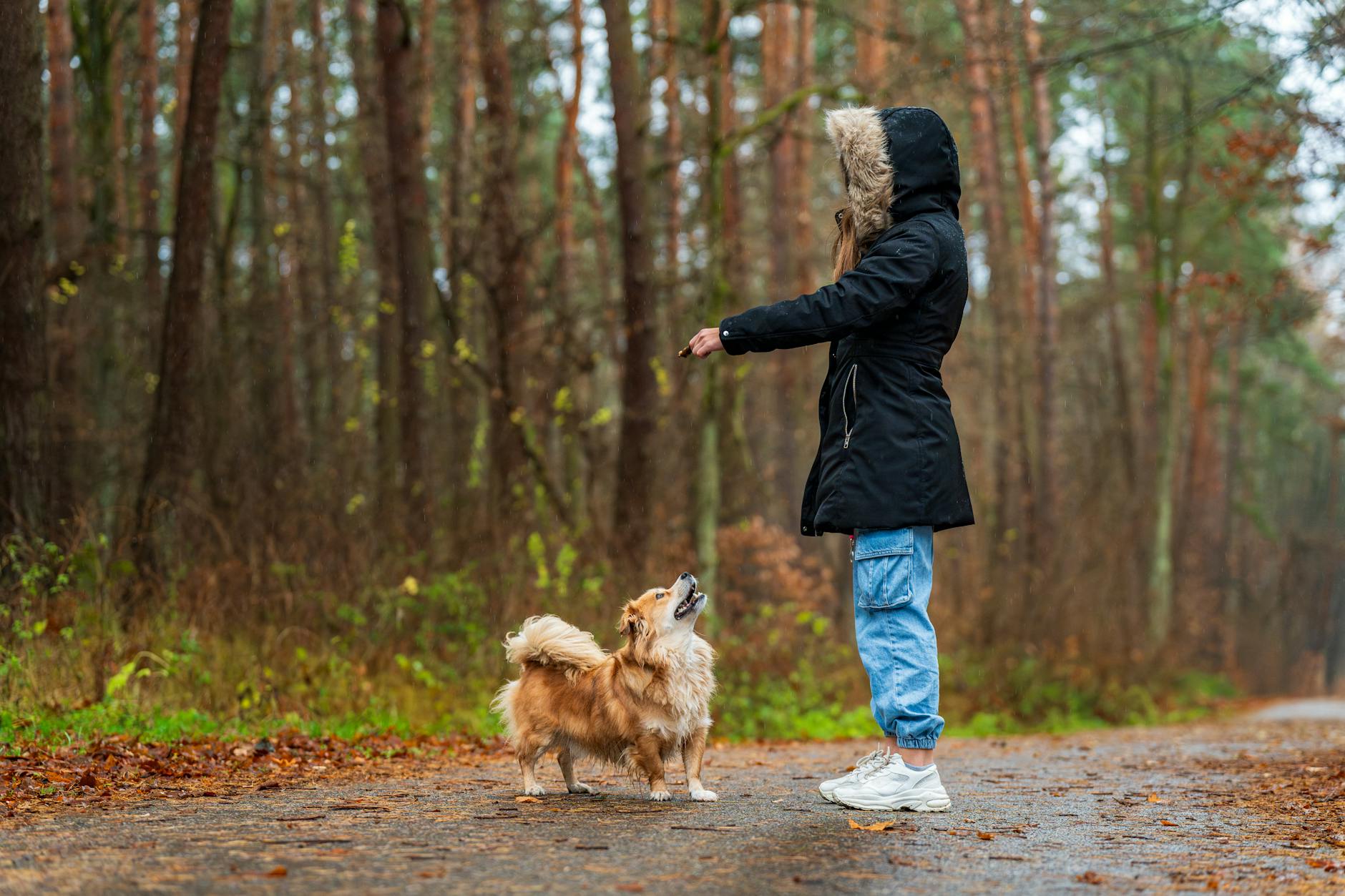
At its heart, positive reinforcement dog training is about rewarding behaviors you want your dog to repeat. Instead of punishing unwanted actions, we focus on motivating our dogs to offer desired behaviors by making those behaviors enjoyable and rewarding. This method centers on the idea that dogs, like all animals, are more likely to repeat actions that lead to positive outcomes. When your dog sits on command and immediately receives a delicious treat, enthusiastic praise, or a favorite toy, they quickly learn that “sit” leads to good things, making them more likely to sit again in the future.
This approach stands in contrast to training methods that rely on intimidation, punishment, or physical corrections. While those methods might suppress a behavior in the short term, they often do so at the cost of the dog’s well-being, trust, and willingness to learn. Positive reinforcement, on the other hand, fosters a cooperative relationship, reduces stress and anxiety in dogs, and ultimately creates a more confident, happy, and well-behaved companion. It transforms training from a chore into a fun and engaging activity for both you and your dog, building a deeper bond based on mutual respect and understanding.
Key elements of successful positive reinforcement include:
- Timing: Rewards must be delivered within 1-3 seconds of the desired behavior for your dog to make the correct association. A clicker can be an invaluable tool here, precisely marking the exact moment your dog performs the desired action.
- Consistency: Everyone in the household must use the same cues and reward the same behaviors. Inconsistency can confuse your dog and slow down the learning process.
- High-Value Rewards: What motivates your dog? For some, it’s a piece of chicken; for others, a squeaky toy or a quick game of tug. Use rewards your dog truly values, especially when learning new behaviors or in distracting environments.
- Short, Frequent Sessions: Dogs have short attention spans. Keep training sessions brief (5-10 minutes) but frequent throughout the day to maximize engagement and prevent boredom or frustration.
The Science Behind Positive Reinforcement
The efficacy of positive reinforcement training is rooted in the principles of operant conditioning, a learning theory pioneered by B.F. Skinner. In operant conditioning, an animal learns to associate a voluntary behavior with its consequences. Positive reinforcement specifically refers to the addition of something desirable (a reward) after a behavior, which increases the likelihood of that behavior being repeated. When your dog performs an action, and a positive consequence follows, the neural pathways associated with that action are strengthened, making it more probable that your dog will offer that behavior again.
This scientific understanding highlights why punishment-based methods are less effective and often detrimental. Punishment, or the addition of something aversive, might suppress a behavior, but it doesn’t teach the dog what to do instead. It can also lead to fear, anxiety, aggression, and a breakdown of trust between dog and owner. Conversely, positive reinforcement taps into a dog’s natural desire to earn rewards and please its human, creating a positive feedback loop that makes learning enjoyable and sustainable. It leverages the dog’s intelligence and natural curiosity, rather than relying on fear or pain, making it the humane and scientifically supported choice for dog training.
Essential Puppy Basics & Early Socialization
Bringing a new puppy home is an exciting time, and laying a strong foundation during their early months is crucial for their development into a well-adjusted adult dog. Puppyhood is a critical period for learning and socialization, and positive reinforcement is the ideal method to guide them through this stage.
Potty Training: One of the first challenges is potty training. Establish a consistent schedule: take your puppy out first thing in the morning, after every meal, after waking from a nap, after playing, and before bedtime. When they eliminate outside, immediately praise them enthusiastically and offer a high-value treat. Avoid punishment for accidents; simply clean them up thoroughly to remove scent cues. If you catch your puppy in the act indoors, calmly interrupt them, take them outside, and reward if they finish there.
Crate Training: A crate, when introduced positively, can become a safe, den-like sanctuary for your puppy. Introduce it gradually, making it a comfortable place with soft bedding and toys. Feed meals inside, throw treats in, and let your puppy explore at their own pace. Never use the crate as punishment. It aids in potty training by discouraging elimination in their sleeping area and provides a secure space when you can’t directly supervise.
Bite Inhibition: Puppies naturally explore with their mouths. It’s essential to teach them bite inhibition – how to control the force of their bite. When your puppy bites too hard during play, yelp loudly (like a littermate would), and immediately withdraw attention or end play for a few moments. Re-engage only when your puppy is calm. Provide plenty of appropriate chew toys to redirect their mouthing instincts.
Early Socialization: The socialization window (typically 3-16 weeks) is vital. During this time, introduce your puppy to a variety of positive experiences: different people (of all ages and appearances), friendly vaccinated dogs, various sounds, surfaces, and environments. Ensure these encounters are always positive and non-threatening. Carry your puppy to public places if they’re not fully vaccinated. Enroll in a positive reinforcement puppy class, which offers structured socialization and basic obedience in a safe environment. Proper socialization helps prevent fear-based behavioral issues later in life.
Foundation Obedience Cues for a Well-Behaved Dog
Teaching basic obedience cues using positive reinforcement creates a common language between you and your dog. These cues are not just for tricks; they are essential for safety, managing behavior, and building a foundation for more advanced training.
The “Sit” Cue
- Method: Hold a treat near your dog’s nose. Slowly move the treat upwards and back towards their tail. As their nose follows the treat, their rear end will naturally lower into a sit. The moment their rear touches the ground, say “Yes!” or click, and give the treat.
- Practice: Repeat several times in short sessions. Once your dog is reliably sitting, start adding the verbal cue “Sit” just as they begin to lower.
The “Stay” Cue
- Method: Start with your dog in a “Sit.” Say “Stay,” take one step back, pause for a second, then return and reward. Gradually increase distance and duration before returning to reward.
- Important: Always return to your dog to reward them at the beginning. If they break the stay, calmly guide them back to the original spot and restart. Only add a release cue (“Okay!” or “Free!”) once they understand “Stay.”
“Come” (Recall)
- Method: Start in a quiet, distraction-free area. With your dog a short distance away, say “Come!” in an excited, happy voice, and immediately crouch down, making yourself inviting. As your dog approaches, praise them enthusiastically and give a high-value treat when they reach you.
- Practice: Make recall a fun game! Never scold your dog if they take time to come; always make coming to you a positive experience. Gradually increase distractions and distance.
“Leave It”
- Method: Place a low-value treat on the ground, cover it with your hand. Say “Leave it.” When your dog looks away from the treat, immediately mark (“Yes!” or click) and reward with a higher-value treat from your other hand. Slowly progress to uncovered treats, increasing the duration they must “leave it” before getting the reward.
Loose-Leash Walking
- Method: Start indoors or in a quiet area. When your dog walks beside you with a loose leash (no tension), immediately mark and reward. If the leash tightens, stop walking. Wait for the leash to slacken, then resume walking and reward.
- Practice: Be consistent. Avoid pulling back on the leash; instead, change directions frequently. This teaches your dog to pay attention to you and that tension on the leash stops forward movement.
Understanding Dog Body Language & Communication
Dogs are constantly communicating with us and with each other through a rich tapestry of body language, vocalizations, and scent. Learning to “read” your dog’s signals is paramount to understanding their emotional state, preventing miscommunications, and building a stronger bond. A well-informed owner can recognize signs of happiness, stress, fear, or anxiety, and respond appropriately.
Key indicators to observe include:
- Tail Position & Movement: A high, fast-wagging tail can indicate excitement, but a low, tucked tail usually signals fear or submission. A relaxed, mid-level wag often indicates contentment.
- Ear Position: Forward, erect ears can mean alertness or curiosity. Flattened or pinned-back ears against the head often suggest fear or anxiety.
- Eyes: Soft, almond-shaped eyes usually mean a relaxed dog. “Whale eye” (where the whites of the eyes are visible around the iris) can be a sign of stress or discomfort. Dilated pupils can also indicate fear or arousal.
- Mouth & Licking: A relaxed, slightly open mouth with a loose tongue often means happiness. A tightly closed mouth or lip licking (when no food is present) can be a stress signal. A yawn (when not tired) can also be a calming signal.
- Posture & Movement: A “play bow” (front end down, rear end up, tail wagging) is an invitation to play. A stiff, rigid posture, perhaps with a low growl, indicates tension or aggression. A dog trying to make itself smaller, hunching, or avoiding eye contact may be fearful.
- Calming Signals: Dogs use a variety of subtle signals to defuse tense situations or communicate discomfort, such as yawning, lip licking, turning their head away, sniffing the ground, or slow blinking. Recognizing these helps you avoid overwhelming your dog.
By paying close attention to these signals, you can better understand when your dog needs space, when they’re happy to interact, or when they’re feeling overwhelmed. This insight allows you to create an environment where your dog feels safe and understood.
Tackling Common Behavior Challenges Humanely
Even with a strong foundation, dogs can develop behavior challenges. Positive reinforcement offers humane and effective strategies to address these issues by understanding the root cause and teaching alternative, acceptable behaviors.
Managing Excessive Barking
Dogs bark for various reasons: boredom, attention-seeking, alarm, fear, or excitement. Identifying the trigger is the first step.
- Identify the Cause: Is it at passersby, when left alone, or during play?
- Remove or Reduce Triggers: Use curtains for window barking, provide mental stimulation for boredom, ignore attention-seeking barking.
- Teach a “Quiet” Cue: When your dog barks (e.g., at the doorbell), let them bark a few times, then hold a treat to their nose. When they stop barking to sniff the treat, say “Quiet!” (or “Shush!”) and reward. Gradually increase the duration of quiet required before the reward.
- Provide Enrichment: A tired dog is a quiet dog. Ensure your dog gets enough physical exercise and mental stimulation through puzzle toys or training games.
Redirecting Destructive Chewing
Chewing is a natural dog behavior, especially for puppies exploring their world or adult dogs relieving stress/boredom.
- Provide Appropriate Chews: Offer a variety of durable, safe chew toys, bones, and puzzle toys. Rotate them to keep things interesting.
- Supervision & Management: Supervise your dog closely, especially puppies. When you can’t supervise, use a crate or dog-proofed area to prevent access to inappropriate items.
- Teach “Leave It”: If your dog chews something inappropriate, use your “Leave It” cue and immediately redirect them to an appropriate chew toy, praising and rewarding them when they engage with it.
Preventing Jumping Up
Dogs jump for attention, excitement, or to greet us at eye level. It’s often inadvertently rewarded by our reactions.
- Ignore Jumping: When your dog jumps, turn your back, cross your arms, and make no eye contact or verbal sounds. Only engage when all four paws are on the floor.
- Reward “Four on the Floor”: When your dog approaches calmly or sits, immediately praise and reward them. Teach an alternative greeting behavior like “Sit” for attention.
- Management: For very excited jumpers, consider keeping them on a leash when guests arrive, or having them go to their mat until they can calmly greet.
Mastering Leash Manners
A dog that pulls on the leash can make walks unpleasant. The goal is to teach your dog that a loose leash is rewarding.
- Reward Loose Leash: Every time your dog walks beside you with a loose leash, mark and reward.
- Stop and Go: If your dog pulls, immediately stop walking. Wait for the leash to slacken, then resume. Your dog will learn that pulling gets them nowhere.
- Change Directions: Frequently change direction. This encourages your dog to pay attention to you and keeps them from fixating on pulling forward.
- Equipment: A front-clip harness can be helpful for management as you train, as it redirects a pulling dog’s momentum to the side. Avoid choke chains or prong collars, which use pain or discomfort.
Addressing Separation Stress
Some dogs experience anxiety when left alone, manifesting as barking, destructive chewing, or inappropriate elimination. This is a complex issue requiring patience and often professional help.
- Gradual Departures: Start with very short absences. Practice “pretend” departures (pick up keys, put on coat, sit back down). Gradually increase the duration you’re gone, rewarding calm behavior before and after you leave.
- Create a Safe Space: Ensure your dog has a comfortable, secure area with enrichment toys (like a KONG filled with frozen peanut butter) when you’re away.
- Avoid Punishing: Never punish your dog for behaviors related to separation stress; this will only increase their anxiety.
- Enrichment & Exercise: Ensure your dog receives plenty of physical exercise and mental stimulation before you leave.
Trainer Note: For severe behavior challenges, especially aggression, sudden behavioral changes, or signs of pain, always consult your veterinarian first to rule out any underlying medical conditions. For persistent or complex behavioral issues like severe separation anxiety, compulsive behaviors, or aggression, seeking guidance from a certified professional positive reinforcement dog trainer or a board-certified veterinary behaviorist is highly recommended. These professionals can provide tailored, humane, and evidence-based strategies to help your dog.
Creating a Positive Training Plan
A structured plan helps ensure consistency and progress in your positive reinforcement training. Here’s a sample table outlining a basic training plan, which you can customize based on your dog’s age, personality, and specific needs.
| Cue/Behavior | Goal | Primary Method | Recommended Rewards | Duration/Frequency |
|---|---|---|---|---|
| Sit | Reliable sit on verbal cue in various environments | Lure with treat, mark, reward. Gradually phase out lure. | High-value treats, verbal praise, enthusiastic petting | 3-5 short sessions/day (5-10 minutes each), 5-10 reps per session |
| Come (Recall) | Reliable recall indoors and in low-distraction areas | Make it a fun game, run away from dog, use excited voice, heavy rewards. | High-value treats (chicken, cheese), favorite toy, play | 2-3 sessions/day (5-10 minutes each), 5-10 reps per session |
| Loose-Leash Walking | Walking without pulling, maintaining a slack leash | Reward for loose leash. Stop when leash tightens. Change directions. | Frequent small treats, verbal praise for being in position | Practice on every walk, short segments of focus (2-5 minutes) |
| Leave It | Disengage from tempting items (food, objects) on cue | Start with low-value items, cover, reward for looking away. Progress to higher-value and uncovered items. | Higher-value treats (e.g., if leaving kibble, reward with chicken) | 2-3 sessions/day (5 minutes each), 5-8 reps per session |
| Potty Training | Consistently eliminate outside only | Frequent potty breaks, immediate reward for outdoor elimination. Clean accidents thoroughly. | High-value treats, enthusiastic praise, immediate return indoors (for puppies) | Every 2-3 hours (puppies), after waking, eating, playing, before bed |
| Crate Training | View crate as a positive, safe den | Introduce gradually, feed meals inside, provide comfortable bedding and chew toys. | Treats, puzzle toys (KONG), praise | Short, positive sessions multiple times a day. Gradually increase duration. |
Daily Positive Reinforcement Training Checklist
Incorporating positive reinforcement into your daily routine is key to continuous learning and a happy dog. Use this checklist as a guide:
- [ ] 2-3 Short Training Sessions: Engage in 5-10 minute sessions focusing on known cues and practicing a new behavior or generalizing an old one in a new environment.
- [ ] Provide Enrichment: Offer at least one puzzle toy or long-lasting chew to keep your dog mentally stimulated and prevent boredom.
- [ ] Reward Calm Behavior: Actively look for and reward your dog when they are lying down calmly, resting, or just relaxing.
- [ ] Positive Play Session: Dedicate time for engaging, positive play (fetch, tug-of-war, hide-and-seek) to strengthen your bond.
- [ ] Polite Greetings Practice: Use “four on the floor” protocol for all greetings with family members and visitors to reinforce polite behavior.
- [ ] Observe Body Language: Take a few moments each day to consciously observe your dog’s body language to better understand their needs and emotional state.
- [ ] Review Training Goals: Briefly review your training goals and plan for the next day, noting any areas where your dog excelled or struggled.
- [ ] Adequate Exercise: Ensure your dog receives appropriate physical exercise for their breed and age, helping to burn off excess energy constructively.
Frequently Asked Questions
Q: What is the best age to start positive reinforcement training?
A: You can start positive reinforcement training as soon as you bring your puppy home, typically around 8 weeks old. Even adult and senior dogs can learn new behaviors with positive reinforcement, proving that you can indeed teach an old dog new tricks!
Q: How long does it take for a dog to learn a new trick with positive reinforcement?
A: The learning timeline varies greatly depending on the dog’s individual personality, previous experiences, the complexity of the behavior, and the consistency of training. Some simple cues can be learned in a few short sessions, while more complex behaviors or addressing ingrained habits may take weeks or months of consistent practice.
Q: What if my dog isn’t motivated by treats?
A: Not all dogs are treat-motivated. Experiment with different types of rewards: high-value treats (small pieces of cheese, cooked chicken, hot dogs), favorite toys (balls, squeaky toys), verbal praise, enthusiastic petting, or short games of tug-of-war. The key is to find what your dog values most and use that as the reinforcer.
Q: Can positive reinforcement be used to stop aggressive behavior?
A: While positive reinforcement is a cornerstone of addressing aggressive behavior, it’s a complex issue. It often involves behavior modification techniques like desensitization and counter-conditioning. For any form of aggression, it is crucial to consult with a certified professional positive reinforcement dog trainer or a veterinary behaviorist to ensure a safe and effective plan.
Q: Is it okay to use a clicker for training?
A: Absolutely! A clicker is an excellent tool for positive reinforcement training. It’s a precise marker that tells your dog the exact moment they performed the desired behavior, followed immediately by a reward. This precision can speed up learning and clarify expectations.
Q: How often should I train my dog?
A: Short, frequent training sessions are most effective. Aim for 2-5 sessions per day, each lasting only 5-10 minutes. This prevents your dog from getting bored or overwhelmed and keeps training fun and engaging.
Q: What if my dog isn’t responding to training?
A: If your dog isn’t responding, don’t get discouraged. First, evaluate your rewards (are they high-value enough?), timing (are you rewarding immediately?), and environment (are there too many distractions?). Break the behavior down into smaller, easier steps. If difficulties persist, consider consulting with a certified positive reinforcement trainer for personalized guidance.
Q: Can positive reinforcement be used for all dogs?
A: Yes, positive reinforcement is a universally applicable and humane training method suitable for dogs of all ages, breeds, and temperaments. It fosters a positive learning environment and strengthens the bond between dogs and their owners, making it the preferred method for ethical and effective dog training.
Conclusion
Embracing positive reinforcement dog training is more than just teaching your dog to sit or stay; it’s about fostering a deep, respectful relationship built on trust and mutual understanding. By consistently rewarding desired behaviors, understanding your dog’s unique communication signals, and approaching challenges with patience and kindness, you’ll empower your canine companion to thrive. This journey of learning and growth together will not only result in a well-behaved dog but also enrich your life with a loyal, confident, and joyful friend. Start today, stay consistent, and enjoy every rewarding moment of shaping your dog’s behavior with love and positive reinforcement.
For more insights into creating a happy and healthy life for your pet, explore other valuable resources on BarkNosh. We’re always here to help you navigate the wonderful world of dog care!
Sources & Further Reading
- Understanding Dog Body Language: Decoding Your Canine Companion – AKC
- Positive Reinforcement Training: The Only Way to Train Your Dog – The Humane Society of the United States
- Puppy Socialization: Why It’s Crucial and How to Do It Right – ASPCA
- How to Teach Your Dog to Walk on a Loose Leash – Dr. Patricia McConnell
- Understanding and Managing Separation Anxiety in Dogs – American College of Veterinary Behaviorists
- Why Do Dogs Chew? And How to Manage It – Preventive Vet
- Teaching ‘Leave It’: A Lifesaving Cue for Your Dog – K9 of Mine
- Crate Training Your Dog: A Step-by-Step Guide – Vetstreet