Mastering Positive Reinforcement Dog Training: A Comprehensive Guide for Happy Pups
Estimated reading time: 13 minutes
Key Takeaways
- Positive reinforcement builds trust and strengthens the bond with your dog, focusing on rewarding desired behaviors rather than punishing unwanted ones.
- Early socialization, consistent potty training, and positive crate introduction are crucial for a well-adjusted puppy.
- Teaching essential obedience cues like “sit,” “stay,” “come,” “down,” and “leave it” provides control, mental stimulation, and builds confidence.
- Understanding your dog’s body language and stress signals is vital for anticipating their needs and preventing behavioral issues.
- Common challenges like barking, chewing, jumping, and leash pulling can be effectively addressed with positive solutions, and professional help should be sought for severe issues like separation anxiety.
Table of Contents
- Understanding Positive Reinforcement: Building a Foundation of Trust
- Setting Up for Success: Puppy Training Basics
- Essential Obedience Foundations: Cues for Everyday Life
- Decoding Your Dog’s Language: Understanding Canine Communication
- Navigating Common Behavior Challenges
- Building a Consistent Positive Training Routine
- When to Seek Professional Guidance
- Frequently Asked Questions About Dog Training
- Conclusion: A Lifelong Journey of Learning and Love
- Sources & Further Reading
- Related Keywords & Phrases
- Explore More BarkNosh Guides
Understanding Positive Reinforcement: Building a Foundation of Trust
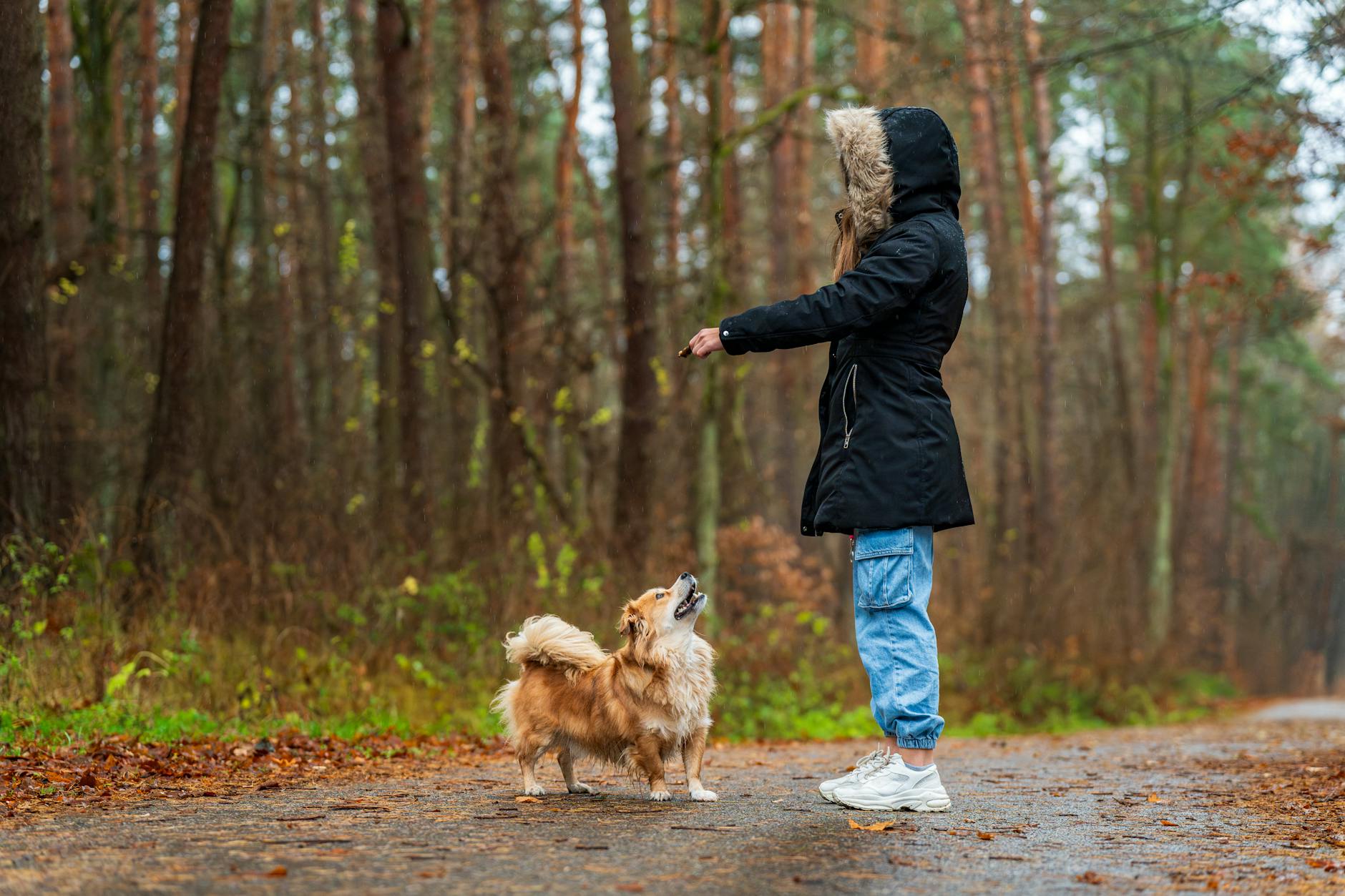
At its core, positive reinforcement dog training is about rewarding behaviors you want your dog to repeat. Instead of punishing unwanted actions, we focus on making good choices highly rewarding for your dog. This method is not about spoiling your dog; it’s about clear communication, motivation, and creating a positive association with learning.
What is Positive Reinforcement?
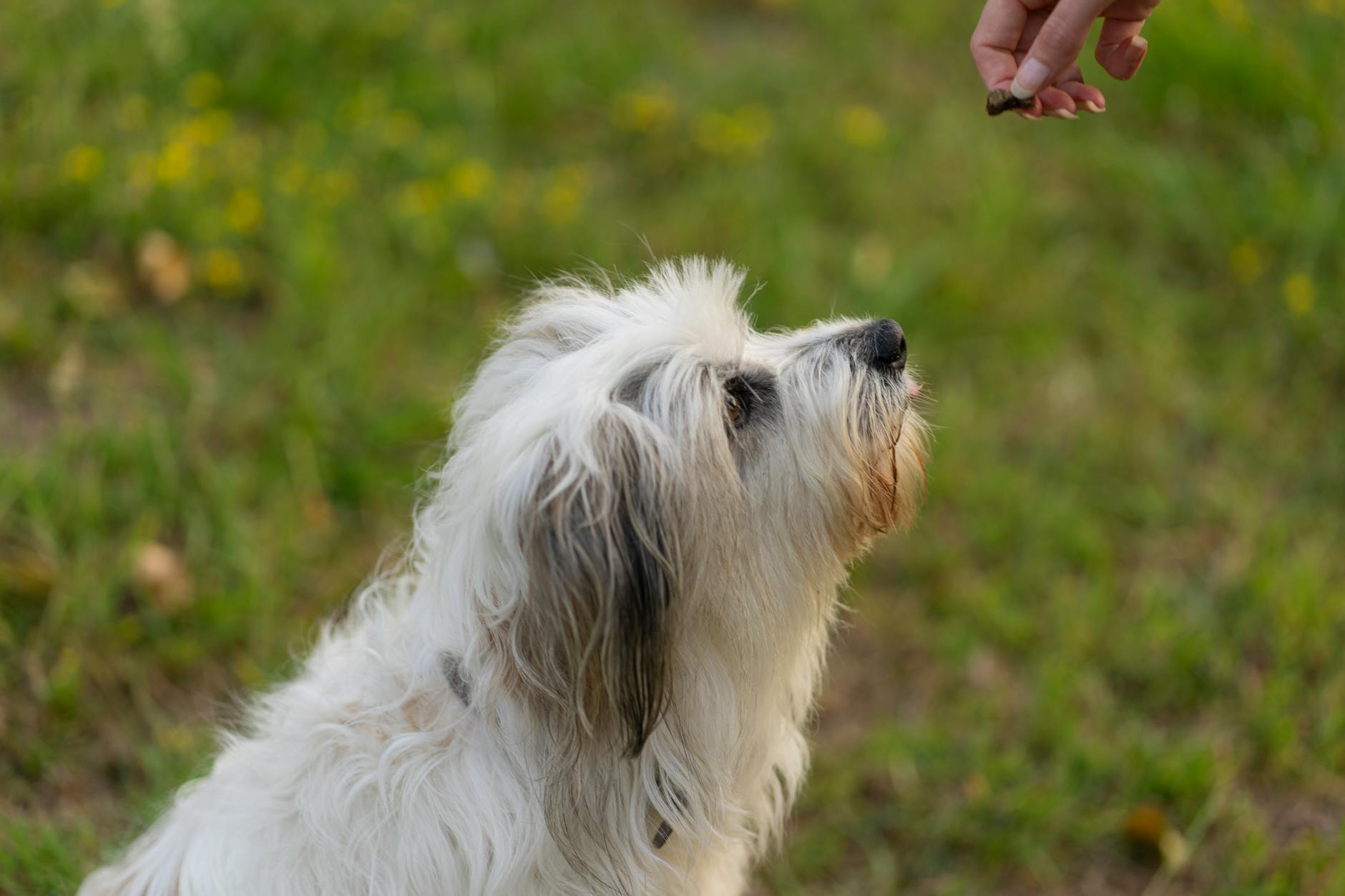
Simply put, positive reinforcement involves adding something desirable (a treat, praise, a toy, a favorite activity) immediately after your dog performs a desired behavior. This makes your dog more likely to offer that behavior again in the future. For example, when your dog sits on command and immediately receives a tasty treat, they learn that sitting leads to good things.
Why Choose Positive Reinforcement?
- Builds a Stronger Bond: Training becomes a fun, cooperative activity rather than a struggle, strengthening the trust and respect between you and your dog.
- Increases Confidence: Dogs learn by succeeding, which boosts their self-esteem and makes them more resilient to new situations.
- Effective and Humane: Studies consistently show that positive, reward-based methods are more effective and lead to fewer problem behaviors compared to aversive techniques.
- Reduces Stress: For both dog and owner, positive training sessions are less stressful and more enjoyable. Dogs are less likely to develop fear-based aggression or anxiety.
- Encourages Problem-Solving: Dogs learn to think and offer behaviors rather than just avoiding punishment.
By consistently rewarding good behavior, you’re teaching your dog that working with you is a rewarding and enjoyable experience, making them eager to learn more.
Setting Up for Success: Puppy Training Basics
The early months of a puppy’s life are crucial for shaping their future behavior and personality. Establishing positive habits and providing early, safe experiences lay the groundwork for a well-adjusted adult dog.
Early Socialization
Socialization isn’t just about meeting other dogs; it’s about safely exposing your puppy to a wide variety of sights, sounds, people, environments, and textures during their critical developmental period (roughly 3-16 weeks). The goal is for your puppy to form positive associations with these novel experiences. Always ensure these interactions are positive and controlled to avoid overwhelming your pup.
- People: Introduce your puppy to people of different ages, appearances (hats, glasses), and voices.
- Sounds: Expose them to common household noises (vacuum, doorbell) and outdoor sounds (traffic, birds) at a low volume, gradually increasing.
- Places: Take them to safe, clean environments like parks, pet stores (if fully vaccinated), or friends’ homes.
- Other Animals: Carefully introduce them to vaccinated, friendly, adult dogs who have good social skills.
Potty Training Essentials
Consistency and patience are key to successful potty training. Establish a regular schedule, anticipate needs, and always reward successes.
- Frequent Potty Breaks: Take your puppy out first thing in the morning, last thing at night, after waking from naps, after playing, and after eating/drinking.
- Designated Spot: Always take your puppy to the same outdoor spot. The scent will encourage them to go.
- Reward Immediately: As soon as your puppy finishes eliminating outside, offer enthusiastic praise, a high-value treat, and perhaps a quick playtime session.
- Supervision & Confinement: Keep your puppy supervised indoors or confined to a puppy-proofed area (like a crate or playpen) to prevent accidents.
- Clean Accidents Thoroughly: Use an enzymatic cleaner to eliminate odors that might attract your puppy back to the same spot.
Crate Training
When introduced positively, a crate can become a dog’s safe den, offering security and aiding in potty training and managing destructive chewing. Never use the crate as punishment.
- Positive Introduction: Make the crate inviting with soft bedding, favorite toys, and treats. Leave the door open initially.
- Gradual Acclimation: Start with short periods, gradually increasing the time your puppy spends inside. Feed meals in the crate.
- Never Force It: The crate should always be associated with positive experiences. If your puppy shows distress, go back a step.
Managing Puppy Nipping and Chewing
Puppies explore the world with their mouths. Teaching bite inhibition and providing appropriate outlets are vital.
- Bite Inhibition: When your puppy nips too hard, yelp loudly, then ignore them for a few seconds. If they continue, calmly remove yourself from the situation (time-out for you, not the puppy). This teaches them how much pressure is too much.
- Provide Chew Toys: Offer a variety of appropriate chew toys. Redirect any unwanted chewing onto a designated toy.
- Teething Relief: Frozen chew toys or Kongs stuffed with frozen treats can provide relief for teething puppies.
Essential Obedience Foundations: Cues for Everyday Life
Teaching basic obedience cues not only provides you with control in various situations but also mentally stimulates your dog and builds their confidence. Consistency, clear communication, and high-value rewards are crucial.
Key Obedience Cues to Teach
Start with these foundational cues:
- Sit: A fundamental cue, useful for greetings, waiting for food, or preventing jumping.
- Stay: Teaches impulse control and can be a life-saver in potentially dangerous situations.
- Come (Recall): Crucial for safety, allowing you to call your dog back to you reliably. Practice in a safe, enclosed area first.
- Down: A relaxed position, often more calming than a sit, and useful for long stays.
- Leave It: An invaluable cue for preventing your dog from picking up potentially dangerous items or snatching food.
Teaching Methods: Luring, Capturing, and Shaping
- Luring: Use a treat to guide your dog into the desired position (e.g., moving a treat over their head to encourage a sit).
- Capturing: Reward behaviors your dog offers naturally (e.g., when your dog sits on their own, mark it with a verbal cue like “yes!” or a click, and reward).
- Shaping: Reward successive approximations of a desired behavior. This is useful for more complex actions (e.g., rewarding a paw lift, then a paw touching your hand, then a full “shake”).
Tips for Successful Training Sessions
- Keep it Short and Fun: 5-10 minute sessions, several times a day, are more effective than one long, boring session.
- High-Value Rewards: Discover what your dog loves most (treats, toys, praise) and reserve the best rewards for training.
- Consistency: Everyone in the household should use the same cues and methods.
- Practice in Different Environments: Once your dog understands a cue in a quiet setting, gradually introduce distractions to generalize the behavior.
Sample Training Plan for Basic Cues
This table outlines a progressive approach to teaching common cues.
| Cue | Primary Method | Progression Tips | Common Challenges & Solutions |
|---|---|---|---|
| Sit | Luring with a treat. | Fade the lure (hand motion only), add verbal cue, practice in new places. | Dog jumps instead of sits: Lure closer to their nose, lower treat. |
| Down | Luring from a sit position, sweeping treat to floor. | Gradually increase duration, practice “down-stay.” | Dog pops up too soon: Reward for even a second of down, gradually increase. |
| Come (Recall) | Start in quiet, enclosed area. Use exciting voice, rewarding enthusiastically. | Practice with increasing distance and distractions. Use a long line for safety. | Dog ignores you: Make yourself more exciting than the environment, use higher value rewards. |
| Stay | Start with short durations, small distances. | Gradually increase time, then distance. Release with a clear word (“free!”). | Dog breaks stay: Go back a step, reward more frequently for short stays. |
| Leave It | Place low-value treat on floor, cover with hand. When dog looks away, say “yes!” and give higher-value treat from other hand. | Increase temptation (higher-value treats, dropped objects), practice on walks. | Dog tries to grab: Practice with very low-value items first, make it easy to succeed. |
Decoding Your Dog’s Language: Understanding Canine Communication
Dogs communicate constantly through a complex system of body language, vocalizations, and scent. Learning to “read” your dog can deepen your bond, help you anticipate their needs, and prevent misunderstandings or potential conflicts.
Key Body Language Signals
- Tail: A relaxed, wagging tail usually indicates happiness, but the speed and height of the wag also matter. A low, slow wag can signal apprehension; a high, stiff, fast wag might indicate arousal or agitation.
- Ears: Relaxed ears fall naturally. Forward-pointing ears often signal alertness or interest. Pinned-back ears can indicate fear or submission, while ears flattened to the side might mean stress.
- Eyes: Soft, blinking eyes usually mean a relaxed dog. “Whale eye” (where the whites of the eyes are visible) often signals stress or anxiety. Staring can be a challenge.
- Mouth: A relaxed mouth, perhaps slightly open with a “smile,” is a happy dog. A tightly closed mouth, lip licking, or yawning (when not tired) can indicate stress. A pulled-back commissure (corner of the mouth) often means discomfort.
- Body Posture: A relaxed, loose posture with weight evenly distributed indicates comfort. A lowered body, tucked tail, or crouching may signal fear or submission. A stiff, rigid posture, often with hackles raised, can precede aggression.
Common Stress Signals
Recognizing these signals can help you intervene before your dog becomes overwhelmed:
- Lip licking
- Yawning (when not tired)
- Turning head away
- Whale eye
- Panting (when not hot or exerted)
- Scratching or shaking off (when not itchy or wet)
- Freezing or becoming very still
- Lowered body posture, tucked tail
Understanding these subtle cues allows you to adjust the environment, remove stressors, or provide reassurance, preventing more intense reactions and promoting your dog’s comfort and confidence.
Navigating Common Behavior Challenges
Every dog owner encounters behavioral challenges. Positive reinforcement offers effective, humane ways to address these issues by understanding the underlying cause and teaching alternative, desirable behaviors.
Excessive Barking
Why dogs bark: Barking is natural communication, but excessive barking can be a nuisance. Reasons include attention-seeking, boredom, fear, territoriality, alerting, or anxiety.
Positive Solutions:
- Identify the Trigger: What makes your dog bark? (e.g., doorbell, squirrels, passing people).
- Address the Cause:
- Boredom: Increase exercise, provide puzzle toys, mental enrichment.
- Attention-seeking: Ignore barking, reward quietness. Never reward barking with attention.
- Territorial/Alert: Manage access to windows/fences, use desensitization and counter-conditioning by rewarding quiet behavior when triggers appear at a distance.
- Teach a “Quiet” Cue: Let your dog bark 2-3 times, then hold a treat to their nose to make them stop. Mark the quietness (“Quiet!”) and reward. Gradually increase the duration of quiet before rewarding.
Destructive Chewing
Why dogs chew: Puppies chew for teething relief. Adult dogs might chew due to boredom, stress, separation anxiety, or simply a lack of appropriate outlets.
Positive Solutions:
- Provide Appropriate Chew Toys: Offer a variety of textures and types (durable rubber, dental chews, puzzle toys). Rotate them to keep things interesting.
- Management: Puppy-proof your home. Restrict access to tempting items or supervise closely. Use deterrent sprays on inappropriate items (test first!).
- Enrichment: Ensure your dog gets enough physical exercise and mental stimulation daily. Puzzle toys, training sessions, and walks can reduce boredom-related chewing.
- Redirection: If you catch your dog chewing something inappropriate, calmly interrupt with a sound (e.g., “ah-ah”), then immediately redirect them to an approved chew toy and reward them for taking it.
Jumping Up
Why dogs jump: Usually a greeting behavior or a way to seek attention or food. They’ve learned that jumping gets a reaction.
Positive Solutions:
- Remove the Reinforcement: Turn your back, cross your arms, and completely ignore your dog until all four paws are on the floor.
- Reward Four Paws On The Floor: The instant your dog is calm with all four paws on the ground, turn around, praise gently, and offer a treat.
- Teach an Alternate Behavior: Train a “sit” or “down” when people approach and reward lavishly for staying in position.
- Communicate with Guests: Ask visitors to follow the same “no attention for jumping” rule.
Leash Pulling
Why dogs pull: Dogs walk faster than humans, are eager to explore, and want to get to exciting scents or sights. They’ve often learned that pulling gets them where they want to go.
Positive Solutions:
- Equip Properly: A front-clip harness or head halter can help manage pulling more effectively than a collar, distributing pressure more comfortably.
- Reward Loose Leash: As soon as the leash goes slack, mark the behavior (“yes!” or click) and reward with a treat. Repeat frequently.
- The “Stop and Go” Method: If your dog pulls, stop immediately. Only start walking again when the leash is loose. This teaches them that pulling gets them nowhere.
- Change Direction: If your dog pulls, calmly change direction. This encourages them to pay attention to you.
- Enrichment on Walks: Allow time for sniffing, as this is mentally stimulating and can reduce the urge to pull constantly.
Separation Stress and Anxiety
Signs: Destructive chewing, inappropriate urination/defecation, excessive barking/howling, pacing, salivating, or attempting to escape when left alone.
Positive Solutions (for mild cases):
- Gradual Departures: Practice leaving for very short periods (seconds), returning before anxiety sets in, and gradually increasing the duration.
- Create Positive Associations: Give a special, long-lasting chew toy or puzzle Kong filled with frozen treats only when you leave.
- No Big Hellos or Goodbyes: Keep departures and arrivals calm and low-key to avoid building anticipation or excitement.
- Pre-Departure Exercise: A good walk or play session before you leave can help your dog relax.
- Background Noise: Leave on a radio or TV to provide comfort and muffle outside sounds.
Trainer note: If your dog exhibits severe separation anxiety (self-harm, extreme panic, consistent destruction despite your efforts), it is crucial to consult with a certified professional dog trainer or a veterinary behaviorist. These cases often require a more intensive, personalized behavior modification plan, potentially including medication in conjunction with training, to ensure your dog’s well-being.
Building a Consistent Positive Training Routine
Incorporating training into your daily life makes it feel less like a chore and more like a natural part of your routine. Consistency from all family members is paramount.
Integrating Training into Daily Life
- Meal Times: Ask for a “sit” or “down” before putting down the food bowl.
- Doorway Manners: Practice “sit” or “stay” before going outside or greeting guests.
- Walks: Use walks as opportunities to practice loose-leash walking, “leave it,” and recall in new environments.
- Playtime: Incorporate “drop it” and “take it” into fetch games.
Checklist for a Positive Training Day
Use this checklist to ensure your dog is getting consistent training and enrichment:
- Morning Walk/Potty: Loose-leash practice, sniff time, immediate reward for outside potty.
- Breakfast: Ask for a “sit” or “down” before feeding.
- Short Training Session (5-10 min): Practice 2-3 known cues, introduce a new step for a new cue. High-value rewards.
- Mental Enrichment: Offer a puzzle toy, snuffle mat, or chew toy.
- Midday Potty/Play: Reinforce potty habits, engage in interactive play (e.g., fetch, tug-of-war).
- Afternoon Training/Walk: Another short training session or a structured walk focusing on specific behaviors.
- Dinner: Repeat mealtime manners.
- Evening Relaxation: Quiet chew toy, gentle petting, reinforce “place” or “down-stay.”
- Last Potty: Immediate reward.
Remember to keep sessions positive and end on a successful note. If your dog isn’t getting it, make it easier!
When to Seek Professional Guidance
While this guide provides a strong foundation, some behaviors warrant the expertise of a professional.
When to Consult a Certified Professional Dog Trainer:
- If you are struggling with a specific behavior despite consistent positive training.
- If the behavior is escalating or seems beyond your ability to manage safely.
- For complex issues like resource guarding, significant reactivity, or persistent aggression towards people or other animals.
- If you’re unsure how to apply specific positive reinforcement techniques effectively.
Look for trainers certified by organizations such as the Certification Council for Professional Dog Trainers (CCPDT), Karen Pryor Academy (KPA-CTP), or the Academy for Dog Trainers (ADT), who prioritize humane, science-based, positive reinforcement methods.
When to Consult Your Veterinarian or a Veterinary Behaviorist:
Trainer note: Always consult your veterinarian if you notice sudden, dramatic changes in your dog’s behavior, new aggression, lethargy, or loss of appetite. These changes could be symptoms of an underlying medical condition or pain, which must be ruled out or addressed before behavior modification can be effective. For severe anxiety, phobias, or aggression, a veterinary behaviorist (a veterinarian with specialized training in behavior) can diagnose and prescribe medication alongside a behavior modification plan.
Frequently Asked Questions About Dog Training
- Q: How long does positive reinforcement training take to see results?
- A: The timeline varies greatly depending on the dog, the behavior, and the consistency of training. You may see small improvements in days or weeks, but complex behaviors or ingrained habits can take months of dedicated effort. Patience and consistency are your best friends.
- Q: Can you teach an old dog new tricks using positive reinforcement?
- A: Absolutely! Dogs of all ages are capable of learning. While older dogs might have established habits, positive reinforcement works just as effectively because it focuses on motivation and rewarding new behaviors. It’s never too late to start training.
- Q: What are “high-value” rewards?
- A: High-value rewards are anything your dog finds incredibly motivating and desirable. This could be tiny pieces of cooked chicken, cheese, hot dogs, special squeaky toys, or even a quick game of tug. They are used for difficult tasks or when training in distracting environments, while lower-value rewards (like kibble or plain praise) are good for easy tasks.
- Q: My dog isn’t food motivated. What can I use as a reward?
- A: Not all dogs are driven by food! Experiment with different types of rewards:
- Toy rewards: A quick game of tug, a chase with a favorite ball.
- Praise and petting: Some dogs adore verbal praise and gentle scratches.
- Access to desired activities: Opening the door for a walk, getting to chase a squirrel (from a distance), or going into the yard.
Observe what your dog enjoys most and use that as their reward.
- Q: Is using a clicker necessary for positive reinforcement training?
- A: A clicker is a precise marker signal that tells your dog “that’s exactly what I want!” the instant they perform the desired behavior, followed immediately by a reward. While not strictly “necessary” (you can use a verbal marker like “yes!”), many trainers find it incredibly effective for its consistency and distinct sound, which isn’t used for anything else. It can speed up learning.
- Q: What if my dog gets easily distracted during training?
- A: Start training in a quiet, low-distraction environment. As your dog masters the behavior there, gradually introduce minor distractions. Make sure your rewards are very high-value, and your training sessions are short and fun to keep their attention. If they get too distracted, make it easier or take a break.
Conclusion: A Lifelong Journey of Learning and Love
Positive reinforcement dog training is more than just teaching cues; it’s a philosophy that fosters a deep, respectful, and joyful relationship with your dog. By understanding their language, rewarding good choices, and patiently guiding them through challenges, you empower your canine companion to become a confident, well-adjusted member of your family. This journey is continuous, filled with learning, laughter, and an unbreakable bond forged in trust and positive experiences. Embrace the process, celebrate the small victories, and enjoy every moment with your happy pup!
Share Your BarkNosh Experience!
What positive reinforcement techniques have worked wonders for you and your dog? Share your success stories and tips in the comments below! Your insights help build a stronger, more informed community of dog lovers.
Sources & Further Reading
- The Ultimate Guide to Positive Reinforcement Training for Dogs
- Puppy Potty Training 101: A Step-by-Step Plan
- Decoding Dog Body Language: What Your Pet Is Telling You
- Stopping Excessive Barking: Humane Solutions That Work
- Crate Training Your Puppy: A Positive Approach
- Loose Leash Walking: Enjoying Walks with Your Dog
- Managing Separation Anxiety in Dogs: A Comprehensive Guide
Related Keywords & Phrases
- Puppy socialization tips
- Humane dog training methods
- Understanding dog signals
- Clicker training for dogs
- Preventing common dog behavior problems
- Obedience training foundations
- Dog enrichment ideas
- Science-backed dog training
- Building a strong dog-owner bond
- Basic dog commands